Tree Condition
The contractor checks for deadwood, cracked unions, crossing limbs, decay, cavities, and branches with weak attachment. Trimming plans should respond to actual defects rather than remove foliage without a clear reason.
Serving Philadelphia, Pennsylvania & surrounding areas
Calls answered around the clock
One call connects you directly with a local tree contractor who handles trimming and serves your area.
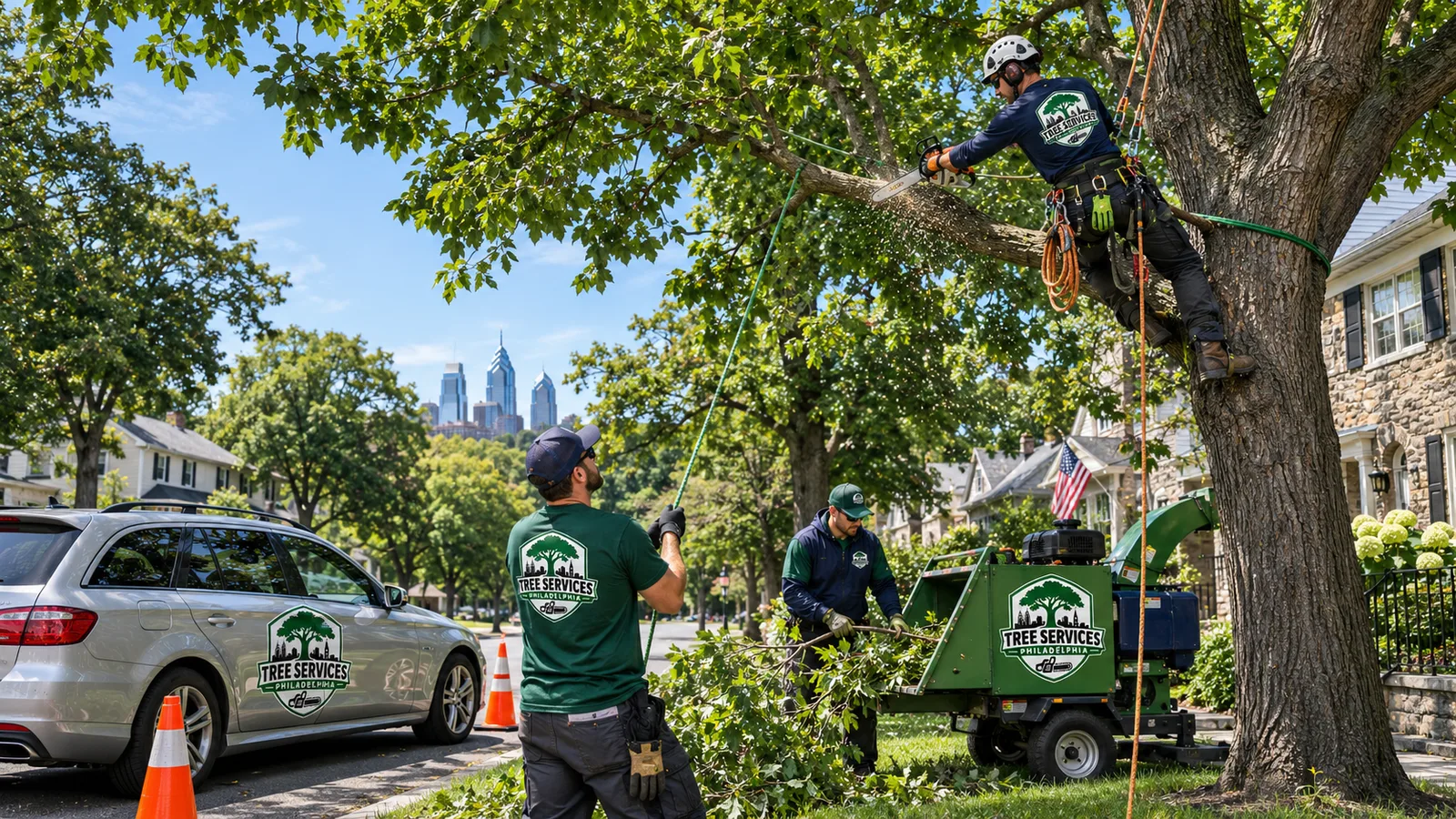
Tree trimming Philadelphia properties may need can range from removing dead limbs to reducing branches that crowd a roof, sidewalk, alley, or neighboring lot. A contractor first considers the tree species, branch structure, nearby targets, and the reason for trimming. Proper cuts are made just outside the branch collar so the tree can close the wound naturally. Flush cuts and long branch stubs can interfere with that process.
Common methods include crown cleaning to remove dead, damaged, or weak branches; selective thinning to reduce branch density; and crown reduction to shorten specific limbs while retaining suitable lateral branches. Crown raising can improve clearance over a walk or driveway, but removing too many lower limbs can affect structure. Topping, which leaves large indiscriminate stubs, often triggers weakly attached shoots and is different from planned reduction pruning.
Philadelphia creates practical access issues as well. Rowhouse yards in South Philadelphia can require careful rigging because branches may be close to roofs, fences, and narrow alleys. In Chestnut Hill, mature trees and larger lots can involve higher canopies and substantial limbs. West Philadelphia has many older residential blocks where broad crowns may extend over porches, sidewalks, and neighboring properties. These conditions affect equipment placement, branch-lowering methods, and debris handling.
Tree Services Philadelphia connects callers with tree servivces companies serving Philadelphia, PA that perform this work. You speak with the contractor directly, discuss the tree and access conditions, receive the quote from that contractor, and decide whether to proceed.
The contractor checks for deadwood, cracked unions, crossing limbs, decay, cavities, and branches with weak attachment. Trimming plans should respond to actual defects rather than remove foliage without a clear reason.
Branches may interfere with a roof, chimney, sidewalk, driveway, street, or neighboring structure. The contractor considers how much clearance is useful without cutting farther back than the tree can reasonably tolerate.
A proper pruning cut respects the branch collar and branch bark ridge. Larger limbs are commonly removed with a multi-cut method that helps prevent bark from tearing down the trunk.
Tight yards, fences, overhead obstructions, parked vehicles, and shared alleys can limit drop zones. Ropes and controlled lowering may be needed to move cut sections away from property.
The suitable timing and amount of pruning depend on the species, condition, and objective. A contractor can explain whether the tree should be trimmed during dormancy or whether a limited safety or clearance cut makes sense at another time.
Branches near energized lines require special handling. The contractor should identify the conflict before work begins and explain the proper next step when utility coordination is involved.
Call when you are ready to speak directly with a local tree contractor. Calls are answered around the clock.
Enter your ZIP code and you are connected with a local contractor who serves that part of Philadelphia or the surrounding area.
The person you speak with is the contractor. Ask about the proposed pruning method, debris handling, property access, and what the quote includes.
The contractor provides the quote and explains scheduling. You decide whether the scope is right for your property.
Skip the search through multiple listings. One call connects you with a local contractor who can discuss the trimming your tree needs, and you stay in control of the decision.
CALL NOW: +1 484 963 4582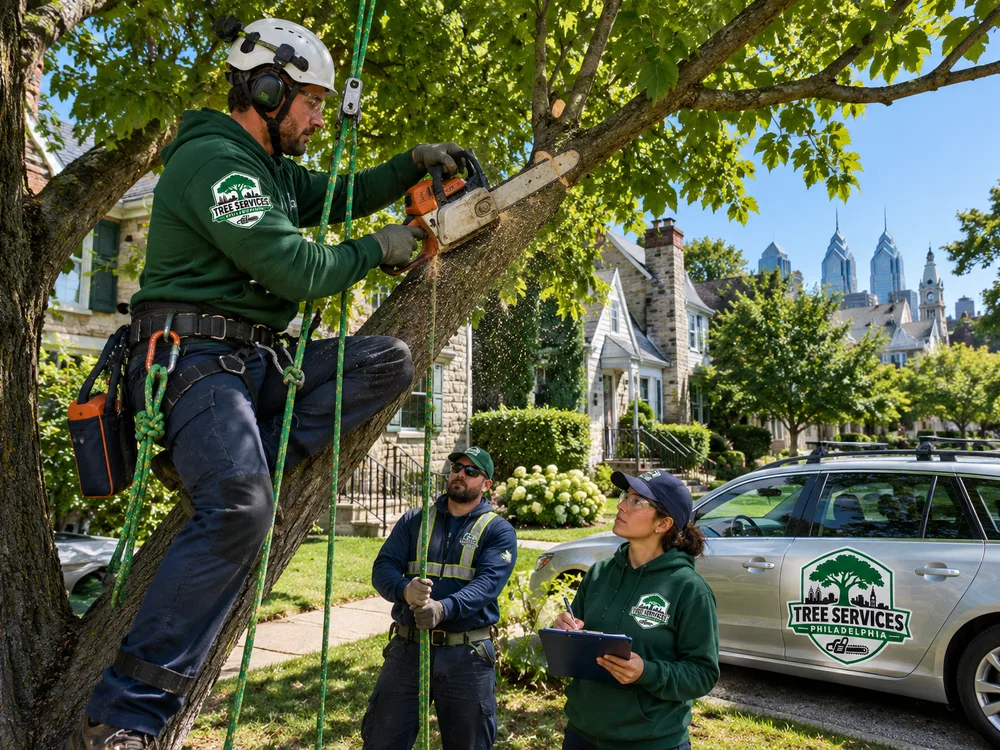
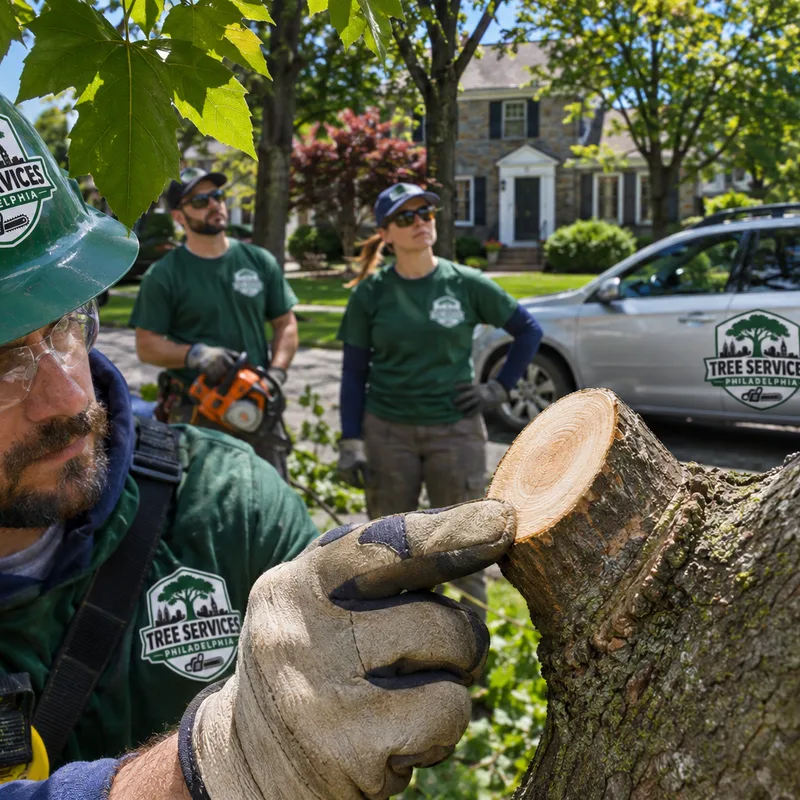
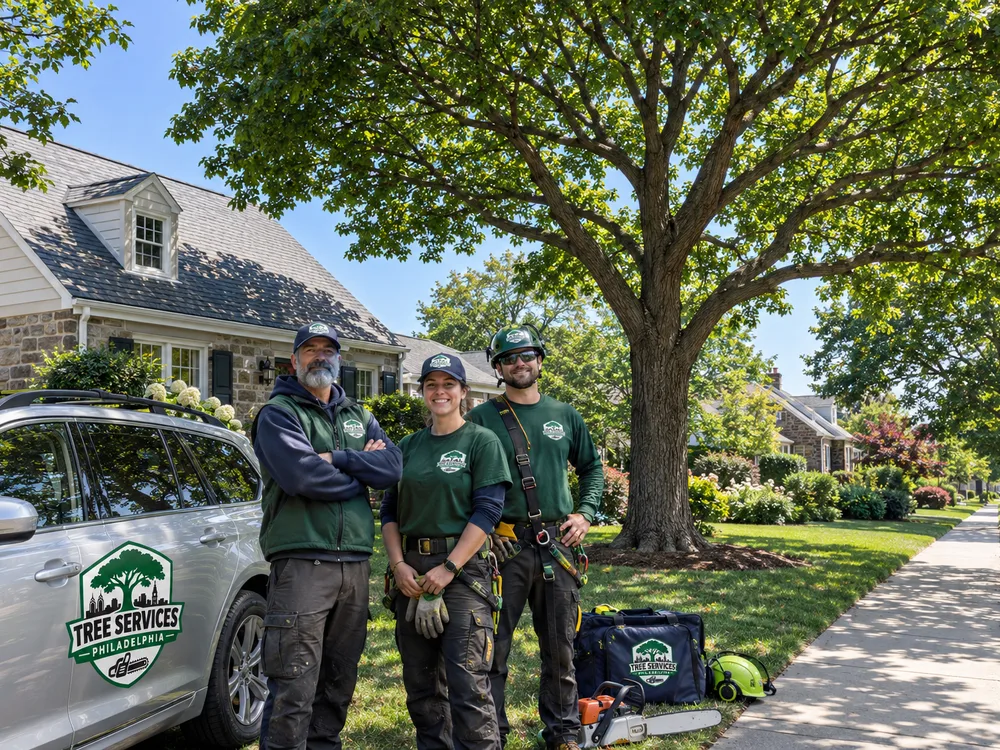
A tree with localized deadwood, crossing limbs, or manageable clearance conflicts may be a trimming candidate, while severe trunk decay, major root failure, or an unstable lean can change the recommendation. The contractor should inspect the whole tree and explain whether pruning can address the concern before a larger course of action is considered.
Trimming can establish clearance, but living branches continue to grow. A contractor can choose reduction cuts that direct future growth toward suitable lateral branches and discuss a maintenance interval based on the species, branch position, and distance from the roof.
The amount should be based on the tree's age, health, species, and pruning objective. Heavy foliage removal can stress a tree and encourage dense sprout growth, so a sound proposal identifies the branches to be removed rather than relying on an arbitrary canopy percentage.
Ask which branches will be removed, what pruning method will be used, how limbs will be controlled near structures, and whether debris removal is included in the quoted scope. It is also useful to ask how the plan avoids topping and protects the branch collar.
Branches near energized conductors require a different safety approach from ordinary yard pruning. In Philadelphia, PECO manages the electric distribution system, and the contractor should identify whether utility coordination or appropriately qualified line-clearance work is needed before cutting begins.
Debris handling depends on the contractor's quoted scope and site access. Ask whether branches will be chipped, whether larger wood will be hauled or left in manageable pieces, and how material will be moved through a narrow rowhouse yard or shared alley.
Work involving a street tree can be subject to City of Philadelphia rules and permitting through Philadelphia Parks & Recreation. A contractor should distinguish a street tree from a tree entirely on private property and discuss the applicable requirements before pruning.
One call connects you directly with a local tree contractor who serves your area. Talk through the trimming scope, get the quote from the contractor, and decide what works for your property.