Selective Limb Removal
Dead, cracked, rubbing, or poorly attached branches can be removed at suitable branch collars. The contractor should avoid flush cuts and explain how each proposed cut affects the remaining crown.
Serving Philadelphia, Pennsylvania & surrounding areas
Calls answered around the clock
One call connects you directly with a local tree contractor who handles cutting, removal, and branch management.
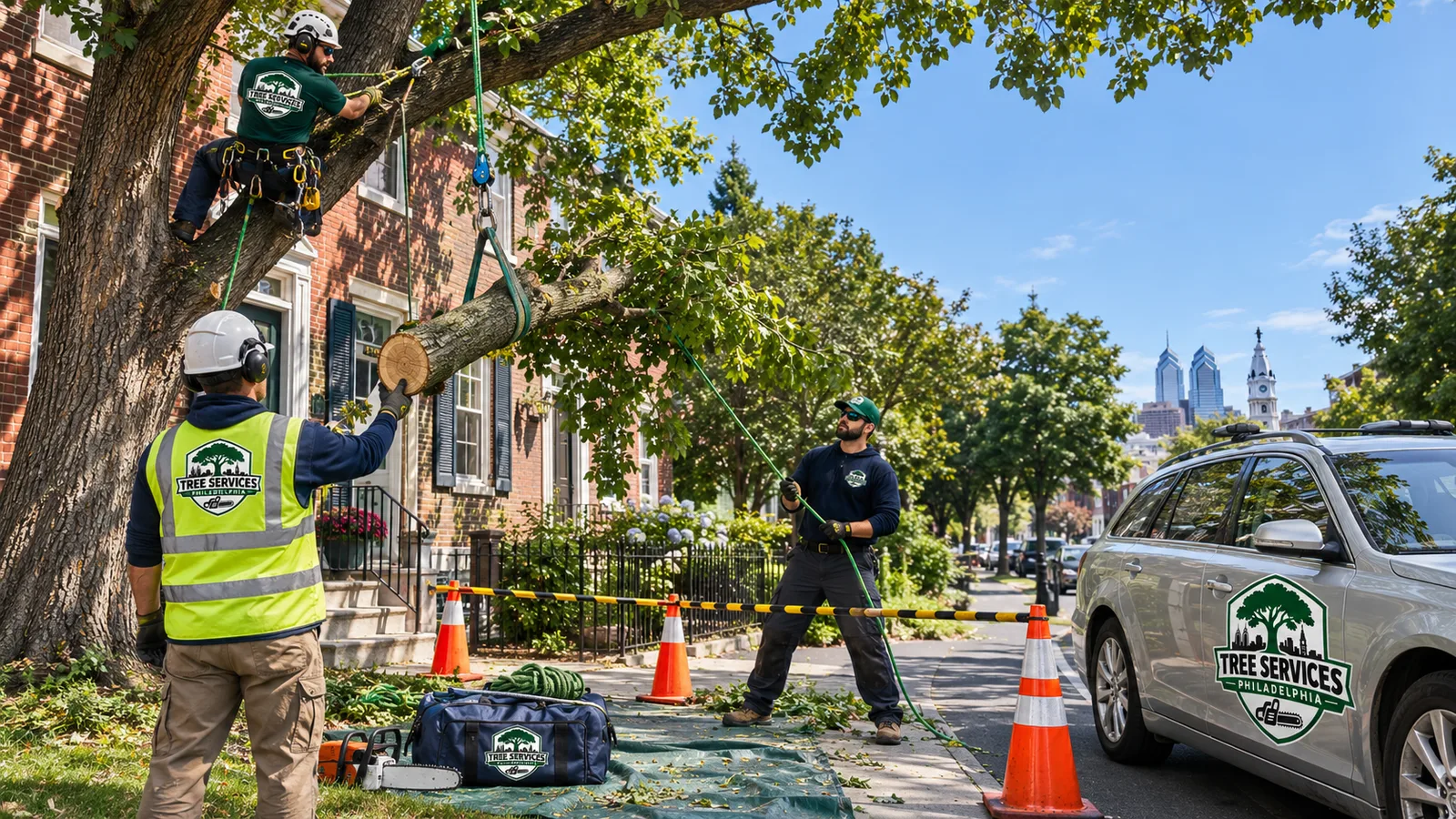
A tree cutting service Philadelphia homeowners call may involve removing one hazardous limb, reducing an overextended crown, clearing branches from a structure, or taking down an entire tree. The right method depends on the tree's condition, species, lean, nearby targets, and the amount of working room around it.
Philadelphia properties can make access a major part of the plan. Narrow rear yards in South Philadelphia may leave little room for lowering wood. Mature trees around Mount Airy can have broad crowns extending over roofs, fences, and neighboring lots. In Roxborough, sloped ground can affect equipment placement and how cut sections are moved. On blocks lined with street trees, responsibility and approval requirements may differ from those for a tree entirely on private property.
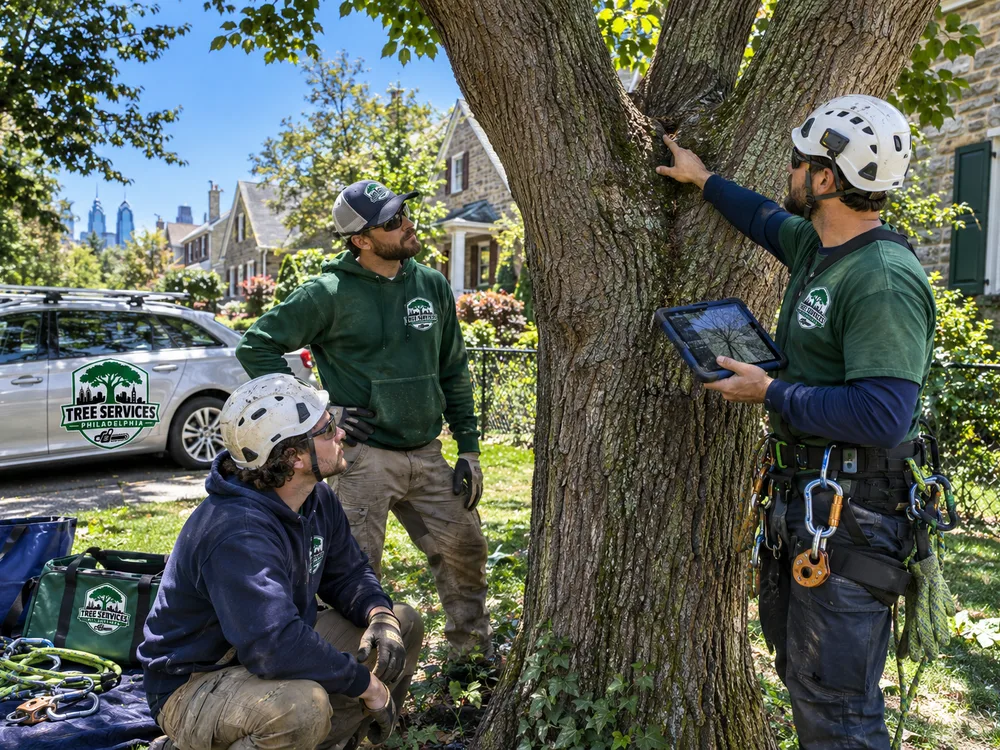
A contractor should first examine the trunk, root flare, main unions, deadwood, cavities, cracks, and the direction of lean. The inspection should also account for buildings, overhead conductors, service drops, vehicles, fences, and pedestrian access. Trees or branches near electrical lines require special planning, and homeowners should avoid approaching any limb that is touching a wire.
Tree Services Philadelphia connects callers with local tree servivces contractors in Philadelphia, PA who serve the caller's area. You speak directly with the contractor about the property, the proposed cutting method, cleanup, and the quote, then decide whether to proceed.
Dead, cracked, rubbing, or poorly attached branches can be removed at suitable branch collars. The contractor should avoid flush cuts and explain how each proposed cut affects the remaining crown.
Reduction shortens selected limbs back to suitable lateral branches. It can reduce leverage on long or overextended branches without relying on indiscriminate topping.
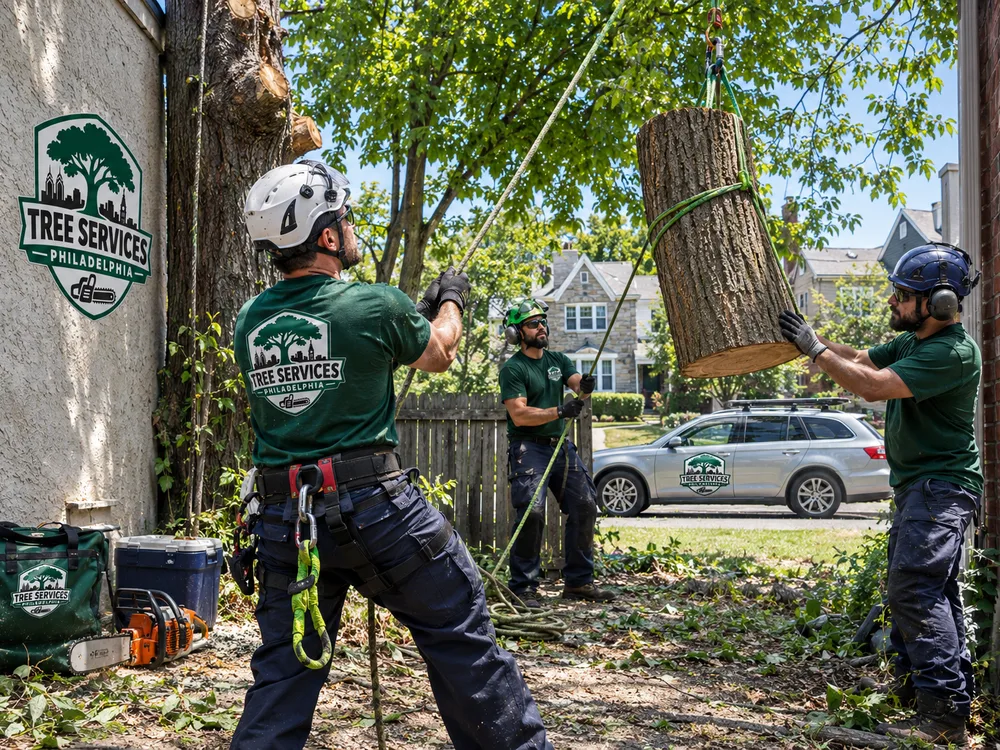
Where open felling space is limited, the tree may be dismantled in sections. Ropes, blocks, lowering devices, and controlled drop zones help manage limbs and trunk pieces around structures.
A whole-tree felling method may be considered when there is adequate clear space and the tree's lean and condition permit it. The contractor determines whether the available drop zone is suitable.
Cleanup terms should state whether branches are chipped, trunk wood is hauled away or left in manageable pieces, and sawdust is cleared from the immediate work area.
Cutting down a tree usually leaves a stump unless grinding or another stump treatment is included. Confirm the intended stump height and how remaining surface roots will be handled.
You are connected directly with a local tree contractor who serves that ZIP. Calls are answered around the clock.
The person you speak with is the contractor. Useful topics include the tree's location, visible damage, access through gates or alleys, nearby structures, overhead lines, and the cleanup result you want.
The contractor assesses the tree and explains whether selective cutting, crown reduction, sectional dismantling, or complete removal fits the conditions. The contractor provides the quote, and you decide whether to proceed.
Before cutting starts, the contractor establishes the drop or lowering zone and considers access for climbing, an aerial lift, rigging, chipping, and wood removal. Vehicles, outdoor furniture, and movable obstacles may need to be cleared.
Branches and trunk sections are cut using the planned method. The contractor then handles chips, logs, and surface debris according to the agreed scope.
One call puts you in direct contact with a local tree contractor who can assess the tree, explain the cutting options, and provide the quote for the proposed work.
CALL NOW: +1 484 963 4582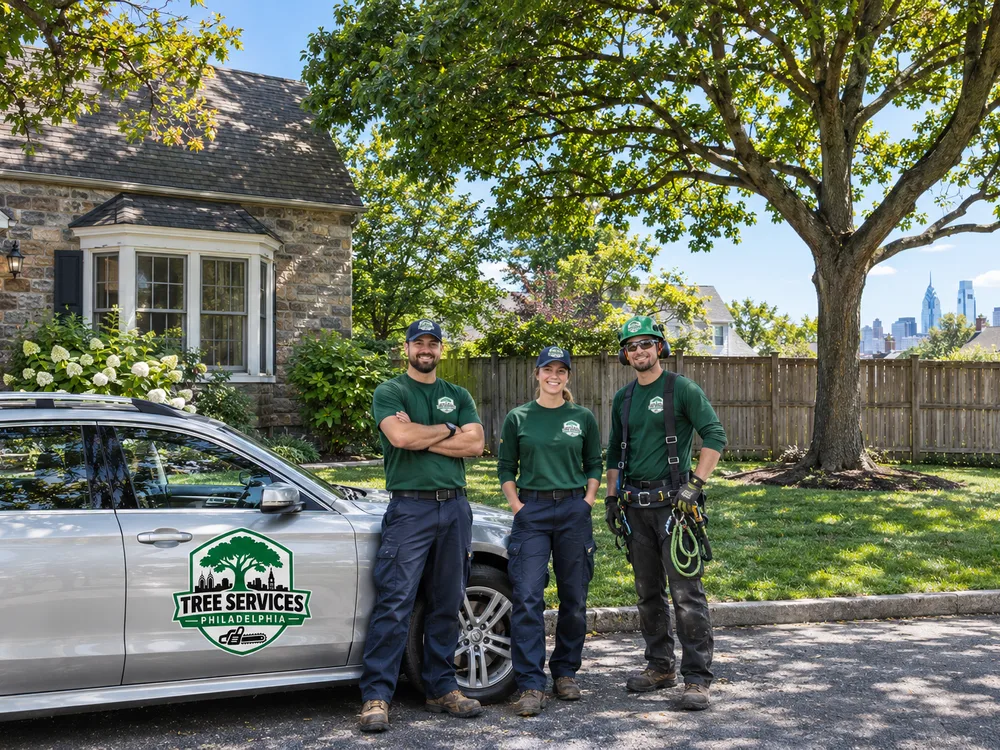
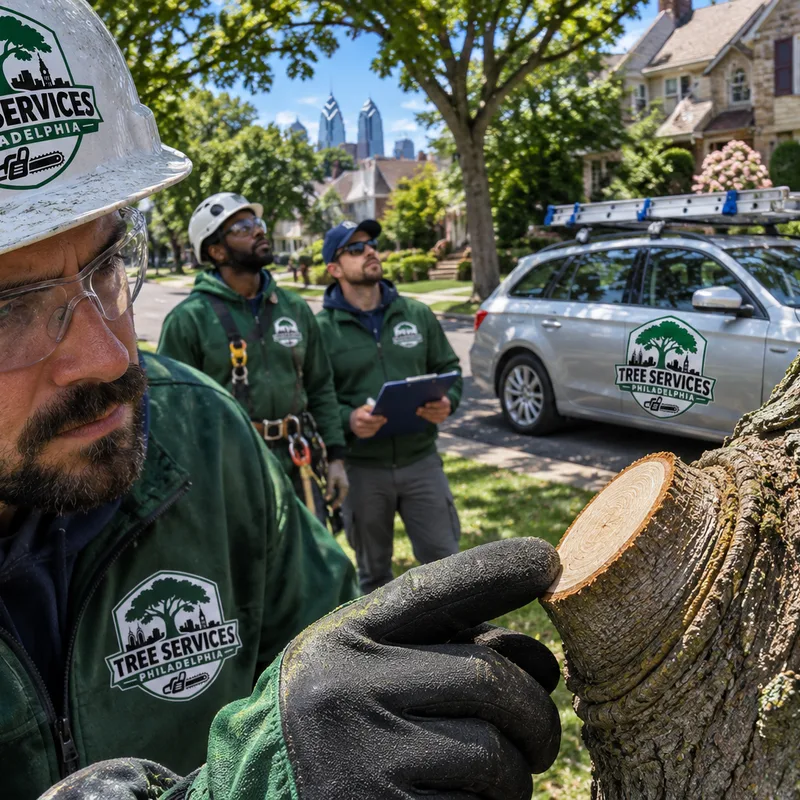
The choice depends on structural condition, remaining live crown, location, and the targets that could be struck if the tree or a major limb fails. A contractor should examine defects such as cracks, cavities, decay, severed roots, weak unions, and substantial deadwood before recommending the scope. Removal may be proposed when defects affect the tree as a whole, while isolated branch problems may support a more limited plan.
A contractor checks the tree's condition, lean, branch structure, root area, access, and nearby hazards before choosing a cutting method. The assessment should account for roofs, fences, adjacent properties, public walkways, overhead conductors, underground features, and enough room to lower or process wood. In tight Philadelphia yards, the route used to carry debris out can shape the work plan.
Tree topping and crown reduction are different methods. Topping cuts branches to stubs or poorly placed laterals, which can trigger weakly attached sprouts and leave large wounds. Crown reduction uses selected cuts back to suitable lateral branches to reduce height or spread while retaining a more natural structure.
Philadelphia Parks & Recreation manages the city's street-tree program, and work on a street tree may require city approval. A tree between the sidewalk and curb should not automatically be treated as a private-yard tree. Confirm responsibility and required permission before authorizing cutting.
The quote should clearly identify which tree and branches are included, the cutting method, debris handling, wood disposition, stump height, and any stump grinding. It should also state whether access preparation or restoration is part of the scope. Ask the contractor how property damage, schedule changes, and added work would be handled before making a decision.
Branches and logs are handled according to the cleanup terms agreed with the contractor. Branches may be chipped, while trunk sections may be hauled away or left at the property in specified sizes. Confirm whether chips, firewood-length pieces, sawdust, and stump grindings remain or are removed.
Call to connect directly with a contractor who serves Philadelphia and the surrounding area. Discuss the tree, hear the proposed approach, get the quote from the contractor, and decide what happens next.