Tree Health Assessment
The contractor examines leaf density, twig growth, bark condition, cavities, fungal growth, insects, root flare, and recent changes around the tree. These clues help separate temporary stress from a problem that needs action.
Serving Philadelphia, Pennsylvania & surrounding areas
Calls answered around the clock
One call connects you directly with a local arborist who serves Philadelphia and handles the tree care you need.
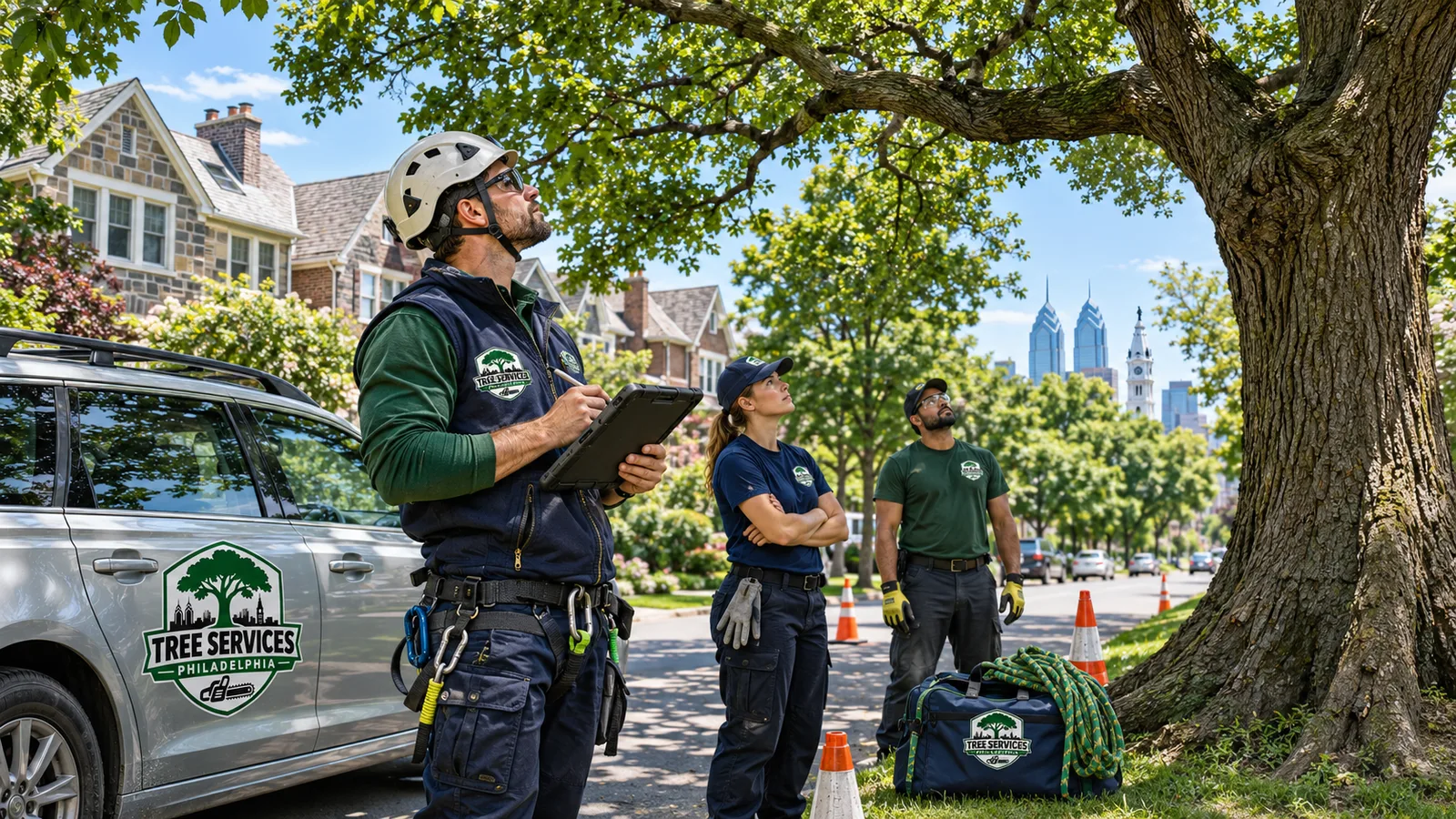
Searching for an arborist in Philadelphia often starts with a tree that looks unhealthy, has grown too close to a structure, or dropped a large limb. An arborist can assess the whole tree before recommending pruning, treatment, support, removal, or continued monitoring. That assessment matters because sparse foliage can come from root damage, drought stress, soil compaction, disease, insects, or a structural defect.
Philadelphia properties present varied working conditions. Mature street trees in rowhouse neighborhoods may have restricted root zones, overhead lines, traffic, parked cars, and narrow access. Larger residential lots can require rigging to lower branches around roofs, fences, gardens, and neighboring property. Hot summers, thunderstorms, winter weather, and repeated freeze-thaw cycles can expose weak unions or damaged limbs.
Tree Services Philadelphia connects callers with local tree servivces contractors serving the Philadelphia area who handle pruning, health assessments, planting, cabling, storm-damage evaluation, and removals. You talk with the contractor directly, discuss the tree and property conditions, and decide whether to proceed.
CALL NOW: +1 484 963 4582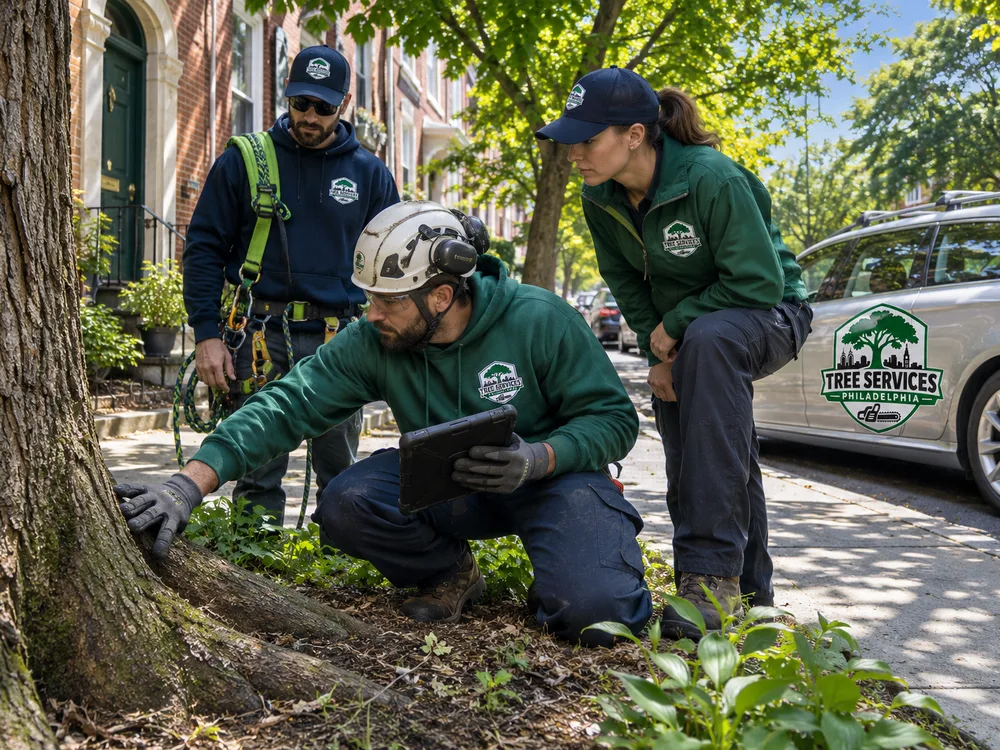
The contractor examines leaf density, twig growth, bark condition, cavities, fungal growth, insects, root flare, and recent changes around the tree. These clues help separate temporary stress from a problem that needs action.
Pruning may remove dead, broken, rubbing, or poorly attached branches while preserving healthy canopy. Proper cuts are made outside the branch collar rather than leaving long stubs or cutting flush against the trunk.
A leaning trunk alone does not determine whether a tree needs removal. The arborist considers root movement, cracks, decay, included bark, canopy balance, soil changes, and what could be struck if a branch or trunk failed.
Species choice, mature size, utility clearance, drainage, planting depth, and available rooting space affect long-term performance. The root flare should remain visible rather than being buried beneath deep soil or mulch.
Support systems may reduce movement at certain weak unions, but they do not repair decay or make a tree failure-proof. The contractor should explain the system's purpose and the need for future inspection.
A contractor can assess hanging limbs, split unions, damaged leaders, uprooting, and branches resting on structures. Trees or limbs touching utility lines require coordination with the appropriate utility before private tree work proceeds.
Enter your ZIP code and you are connected directly with a local arborist contractor who serves that area. Calls are answered around the clock.
You speak with the contractor about the tree, its location, visible symptoms, nearby structures, gates, parking, and overhead lines. Photos may help the contractor understand the setting before an on-property assessment.
The contractor evaluates the tree and explains the recommended work. A clear scope identifies the trees involved, branches or objectives to be addressed, disposal plans, access needs, and whether stump work is included.
The contractor provides the quote and proposed schedule. You can ask questions, review the scope, and decide whether the recommendation fits your property and priorities.
One call connects you with a Philadelphia-area arborist contractor who can assess the tree, explain the practical options, and provide the quote directly.
CALL NOW: +1 484 963 4582
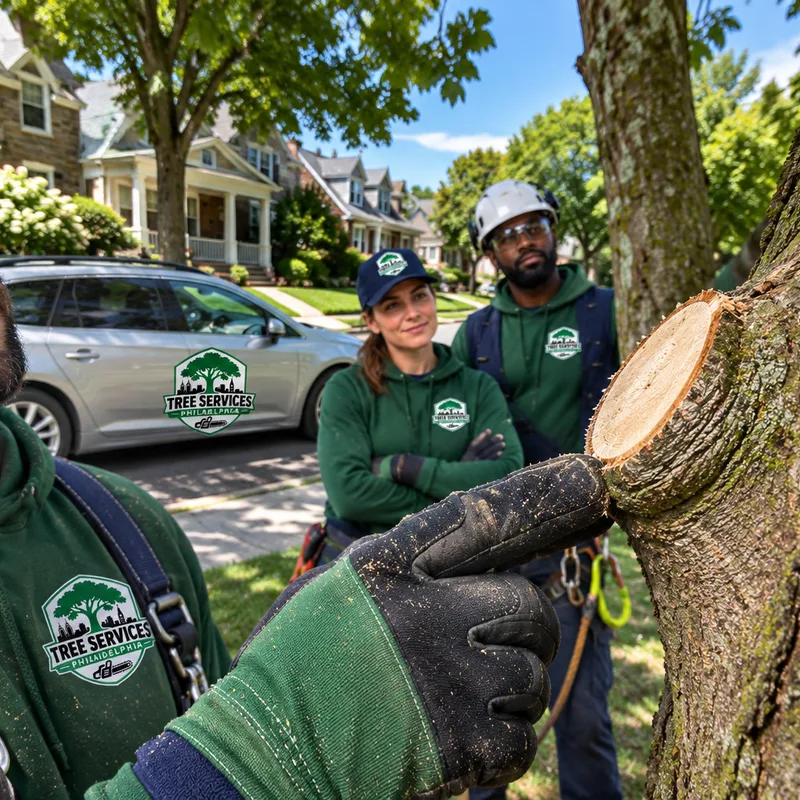
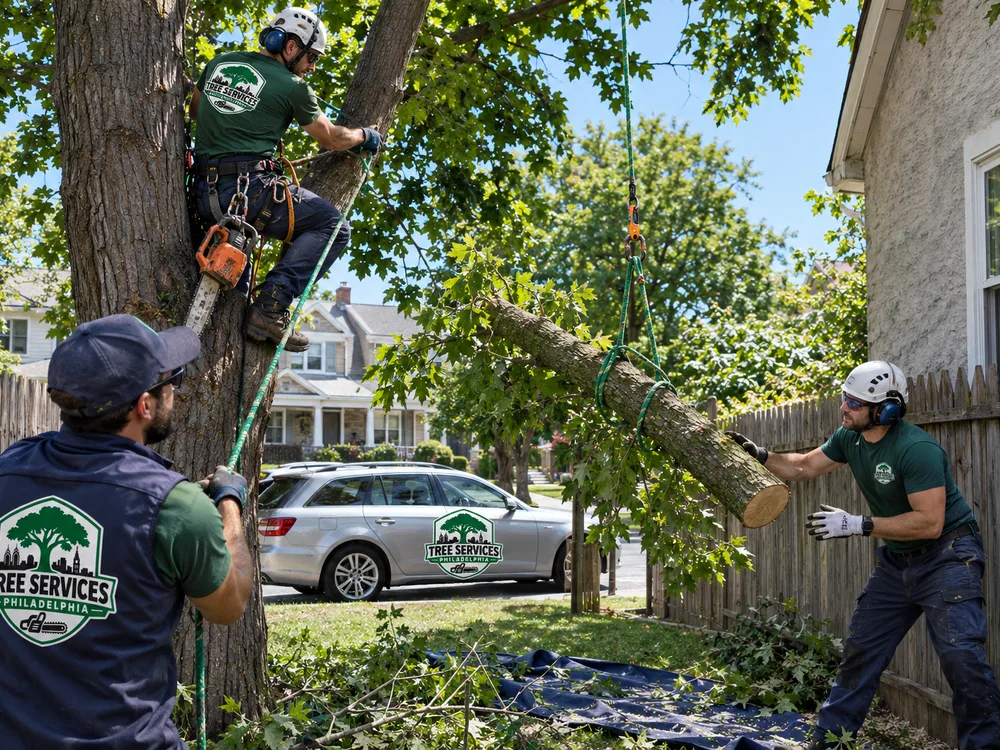
The decision depends on the tree's health, structure, location, and the consequences of failure. The contractor should inspect the trunk, major unions, crown, visible roots, lean, decay indicators, and nearby targets before recommending removal. Pruning may be appropriate when defects are limited and enough sound structure remains.
A pruning scope should name the tree and state the objective rather than relying on vague wording such as “trim as needed.” Ask which limbs or canopy areas will be addressed, how debris will be handled, and whether the goal is deadwood removal, clearance, structural improvement, or crown reduction. Topping and flush cuts can cause lasting damage and should not be treated as routine pruning methods.
Branches touching or very close to energized utility lines require utility coordination. PECO manages electric distribution in Philadelphia, and the arborist contractor can explain whether utility clearance is needed before private work can begin. Keep people and tools away from a fallen limb if a wire may be involved.
Requirements depend on where the tree stands and the scope of work. Street trees in the public right-of-way are managed differently from trees wholly on private property, and Philadelphia Parks & Recreation oversees the city's street-tree program. The contractor should identify the tree's location and explain which permissions may apply before work starts.
Stump grinding is a separate part of the scope unless the contractor specifically includes it. Ask about the intended grinding depth, surface-root treatment, chip removal, backfilling, and access for the grinder. Underground utilities and nearby hardscape can limit how deeply or widely the area can be ground.
Debris handling should be stated in the contractor's scope. Branches may be chipped, logs may be hauled away, or usable wood may be cut to agreed lengths and left on the property. Clarify whether cleanup covers the lawn, sidewalk, street, and access route used during the job.
Ask about mature canopy size, rooting space, drainage, planting depth, watering, mulch placement, and future clearance from buildings and utilities. A properly planted tree has its root flare near grade, with mulch kept away from direct contact with the trunk. The contractor can recommend species suited to the available space and site conditions.
Call once and speak directly with a contractor who serves Philadelphia. Review the tree, the recommended work, and the quote with the person who would handle the job, then decide what comes next.