Tree Pruning
Selective cuts can remove dead, damaged, crossing, or poorly attached branches. A contractor should preserve the branch collar and avoid flush cuts that create a larger wound.
Serving Philadelphia, Pennsylvania & surrounding areas
Calls answered around the clock
One call connects you with a local tree contractor who serves your area and handles the work you need.
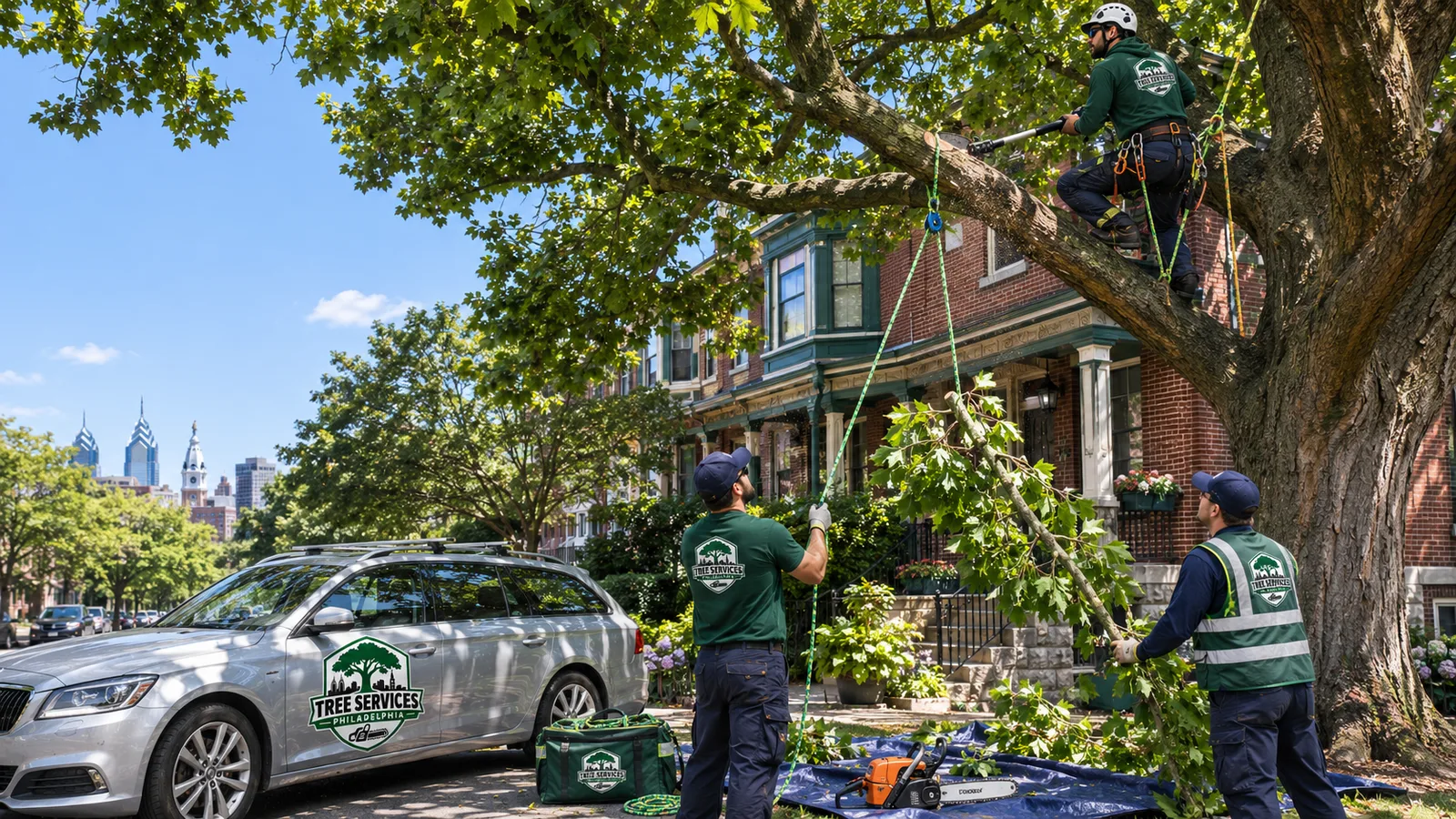
Tree services Philadelphia homeowners request cover everything from selective pruning and crown clearance to full removal, stump grinding, and ongoing care. The right approach depends on the tree's species, condition, location, and relationship to the house, pavement, utility lines, and neighboring property.
A contractor may recommend pruning when the main concern is deadwood, roof clearance, poor branch structure, or limbs rubbing against one another. Removal may be discussed when a tree is dead, structurally compromised, severely declining, or poorly placed for the available space. Stump grinding addresses the remaining stump and major surface roots after removal, while plant health care can include diagnosis, soil-related recommendations, and treatment options.
Philadelphia properties present distinct access questions. Narrow rear yards in South Philadelphia may limit how branches and equipment move through the property. Mature trees in Chestnut Hill can require careful rigging because of their size and proximity to homes. In West Philadelphia, large street and yard trees may overhang sidewalks, porches, and parked vehicles. Tree work near overhead conductors also requires coordination with the utility responsible for those lines rather than ordinary pruning around energized equipment.
We connect callers with tree servivces companies across Philadelphia that serve the caller's area. You speak with the contractor directly about the tree, access, and possible next steps, then decide whether to proceed.
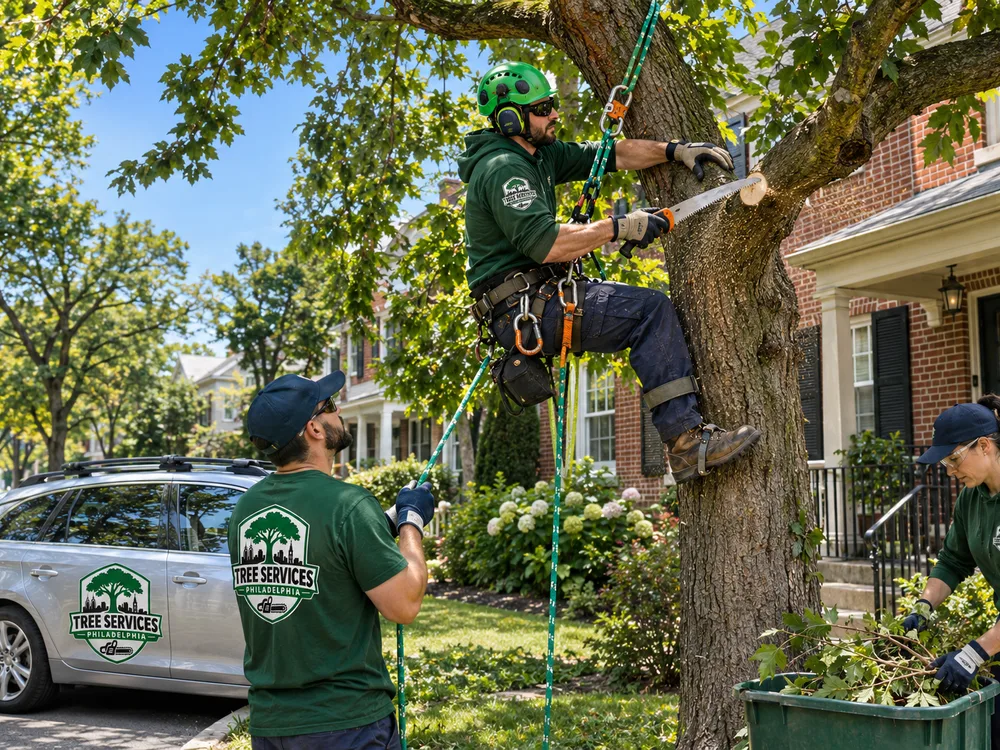
Selective cuts can remove dead, damaged, crossing, or poorly attached branches. A contractor should preserve the branch collar and avoid flush cuts that create a larger wound.
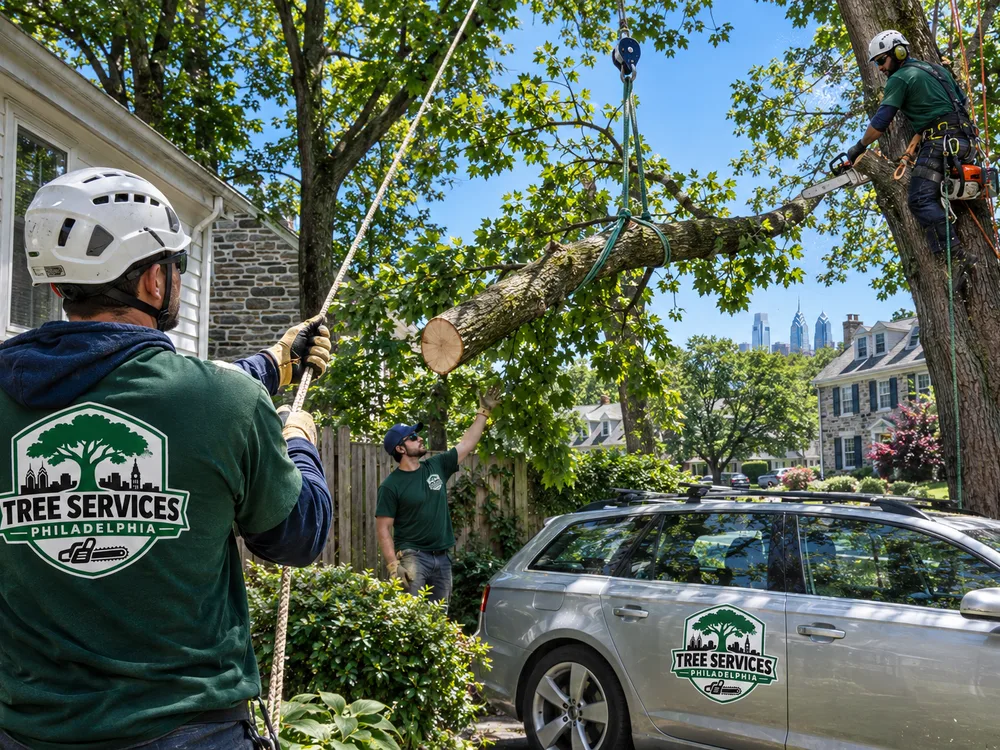
Removal may involve climbing and dismantling the tree in sections, crane-assisted handling where conditions allow, or controlled felling when there is sufficient open space.
A grinder reduces the stump below the surrounding grade. The contractor can explain the intended grinding depth, treatment of surface roots, debris handling, and preparation for the area's next use.
Targeted pruning can create space around roofs, chimneys, facades, sidewalks, and driveways without removing more live growth than the tree can reasonably tolerate.
A contractor can examine foliage, bark, branch unions, visible roots, decay indicators, pest symptoms, and site stress before discussing pruning, treatment, monitoring, or removal.
Split unions, hanging limbs, cracked trunks, and uprooted root plates require careful evaluation. Keep people away from the affected area, especially when wires or unstable branches are present.
Call when you are ready to speak directly with a local tree contractor. Calls are answered around the clock.
Your ZIP code connects you with a contractor who serves that part of Philadelphia or the surrounding area.
The person you speak with is the contractor. Discuss the tree, property access, timing, the proposed scope, debris handling, and how the contractor prepares a quote.
The contractor provides the quote and explains the work. You review the scope and decide whether to move forward.
Skip the search through multiple listings. One call connects you with a local tree contractor who can discuss pruning, removal, stump grinding, or tree health concerns directly.
CALL NOW: +1 484 963 4582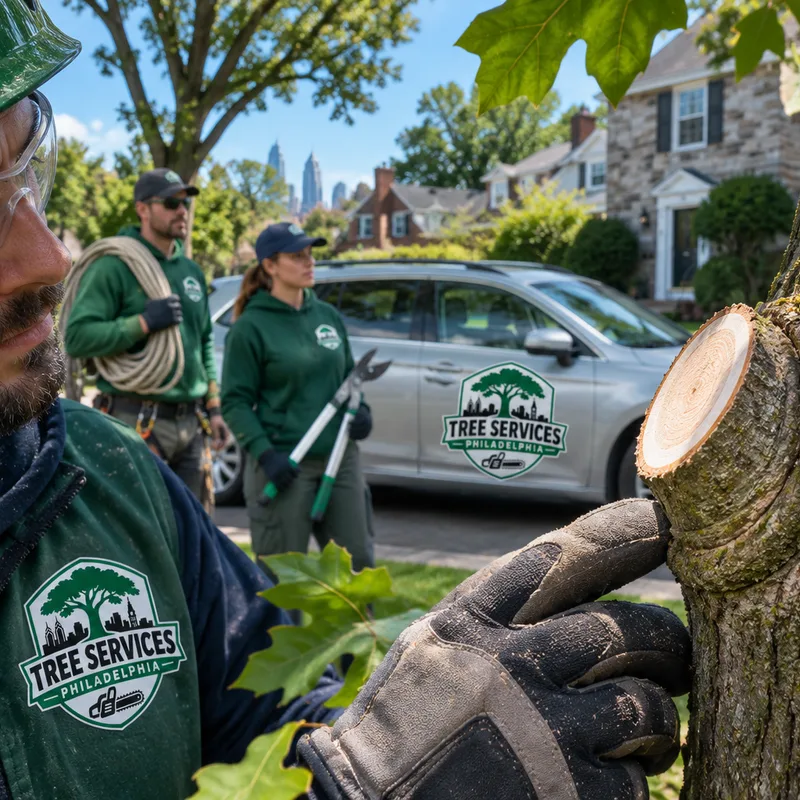
The decision should follow an assessment of the tree's condition, structure, species, location, and remaining useful life. A contractor may look for trunk cavities, decay, dead crown sections, weak codominant stems, root disturbance, lean, cracks, and clearance conflicts before recommending a scope.
A pruning proposal should identify the tree and describe the intended objective, such as deadwood removal, crown cleaning, structural pruning, or clearance from a specific target. Ask which branches or branch sizes are included, how debris will be handled, and whether climbing, aerial equipment, or rigging will be used.
Work near energized conductors requires special handling, and the utility responsible for the lines may need to address vegetation within its clearance zone. In Philadelphia, PECO manages electric distribution infrastructure, so a contractor should identify whether the branches are close enough to utility equipment to require utility involvement.
Street trees may fall under City of Philadelphia rules even when they stand directly outside a home. The contractor should determine whether the tree is within the public right-of-way and whether approval from Philadelphia Parks & Recreation is needed before pruning, removal, or planting.
Sectional removal takes the tree apart in controlled pieces when open felling space is limited. A climber or aerial lift operator removes branches, ropes down pieces when needed, and cuts the trunk into sections while the ground area is kept clear. This method is often relevant on compact rowhouse lots.
Stump grinding generally reduces the stump and selected surface roots rather than excavating the entire root system. Ask the contractor about grinding depth, exposed lateral roots, the volume of grindings, cleanup, and whether the area will be suitable for grass, paving, or replanting afterward.
Compare the exact trees, pruning objectives, removal method, stump scope, access plan, debris handling, and responsibility for permits or utility coordination. Ask each contractor to state exclusions clearly and explain any warranty terms that may apply before you decide.
Keep people, pets, and vehicles outside the potential fall area and avoid standing beneath the branch. Do not approach a tree or limb touching a wire. A tree contractor can assess branch stability and the equipment needed once the area is safe to access.
Make one call and speak directly with a contractor who serves your area. Discuss the tree, the proposed work, and the quote, then decide what happens next.